




 Talk to Our Team
 Start Production








Case Study | Semiconductor CNC Machining
5-Axis CNC Machining for a Thin-Wall Semiconductor Mover Base
TaiMachining controlled deformation, chatter, and datum transfer on a thin-wall aluminum mover base with deep ribbed pockets, end flanges, and related hole groups.
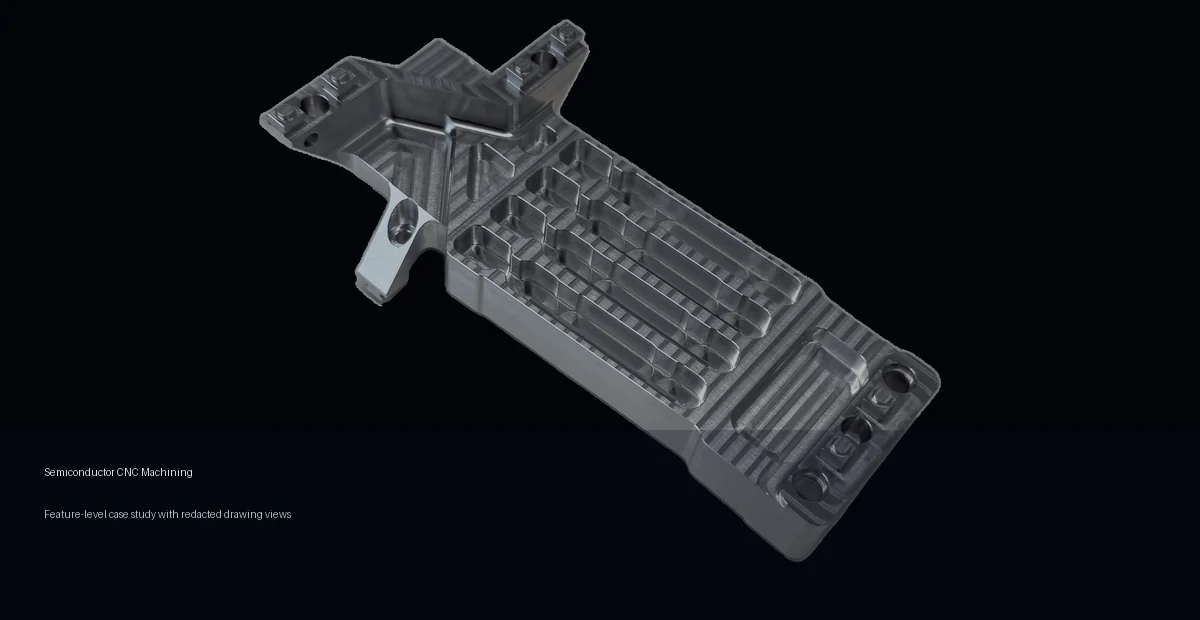
Semiconductor equipment parts often look simple in a CAD preview, but the machining risk is usually hidden in the remaining material. This mover base started as an aluminum structure with large material removal, narrow ribs, deep pockets, related flange features, and hole groups that had to stay consistent from one end of the part to the other.
The project was not difficult because of one isolated tolerance. It was difficult because several features affected each other. If pocket machining released too much stress, the flange relationship could move. If the ribs started to chatter, local wall thickness and surface quality could drift. If the part was flipped too many times, the hole patterns at both ends could carry small positioning errors into final inspection.
For a buyer, this is the difference between a quote based only on machine time and a quote based on real process planning. TaiMachining reviewed the drawing by feature, then matched the setup, roughing allowance, rest period, tool choice, and inspection strategy to the risky geometry.
Deep ribbed pocket area
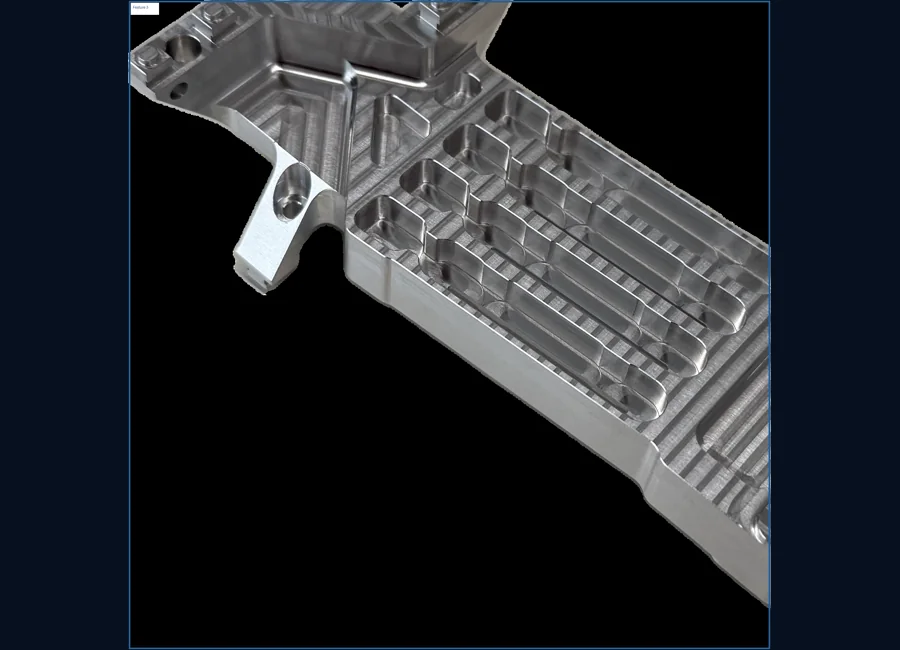
The ribbed cavity could not be machined like a normal pocket. The ribs are narrow, the pockets are deep, and the cutter must reach into the cavity without pushing the thin walls sideways. A long tool may reach the bottom of the pocket, but reach alone is not enough. Tool rigidity, chip evacuation, and cutting load all affect whether the rib stays stable.
TaiMachining treated roughing as a controlled stress release step. Bulk material was removed first, but final rib thickness was not chased too early. Uniform stock was left so the thin ribs were not pulled to one side. After roughing, the part was given time to settle before light finishing passes.
The drawing crop and product close-up make the risk easier to see. The slot-like pockets leave little remaining material. A supplier reviewing this feature should talk about cutter reach, rib support, roughing allowance, and chatter control before giving a confident quote.
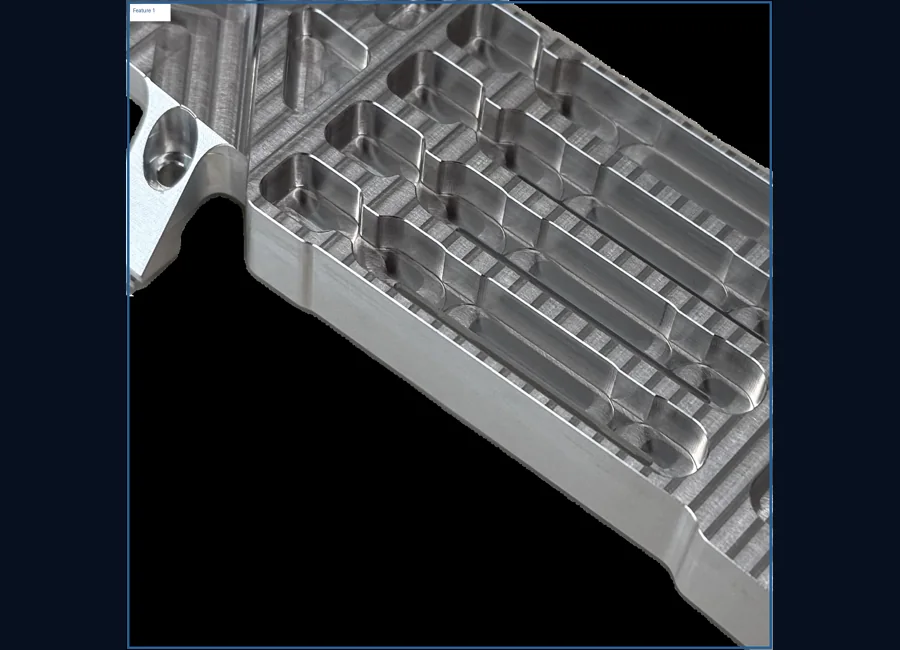
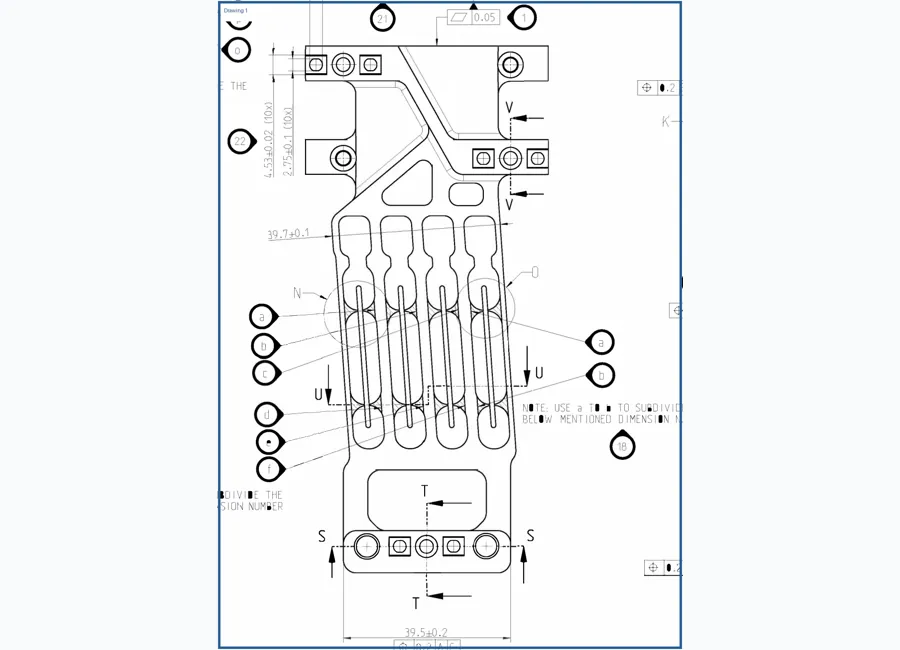
The product close-up and drawing crop show why cutter reach, rib support, and roughing allowance had to be reviewed before quotation.
End flanges and hole patterns
The mounting flanges at both ends include steps, bosses, and related hole groups. These are relationship features, not isolated surfaces. The hole positions, flange parallelism, and boss alignment depend on how the part is located through machining.
Repeated manual flipping would make this part harder to control. Every new setup creates a chance for small datum errors, and those errors matter more when the two ends of the part must still line up. TaiMachining used a process route that reduced unnecessary datum transfers and kept the flange features tied to a consistent setup plan.
In RFQ review, this area deserves a specific question: how will the supplier keep both ends related through machining and inspection? If the answer only lists tolerances, the process risk may not have been fully reviewed.
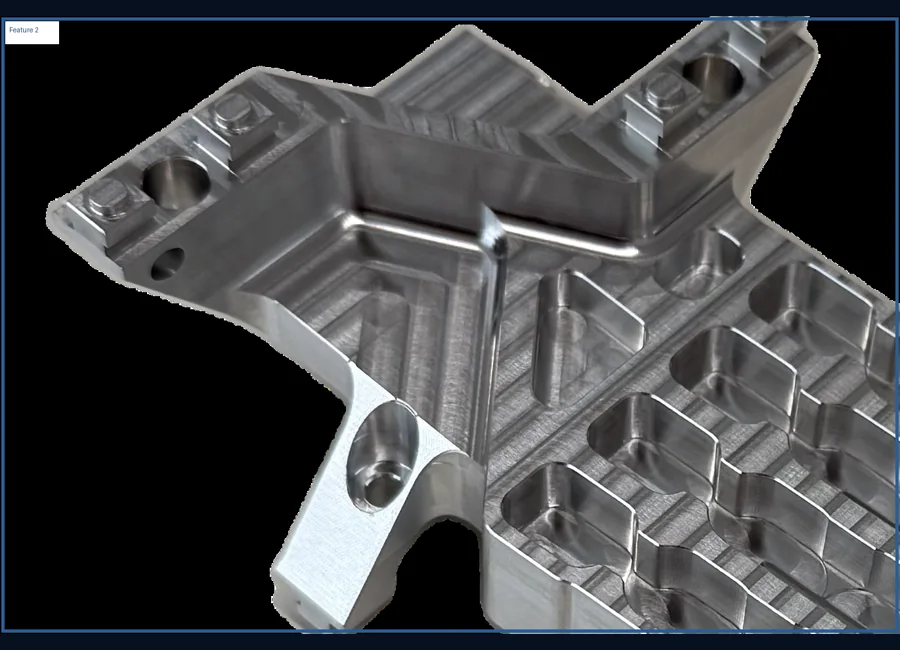
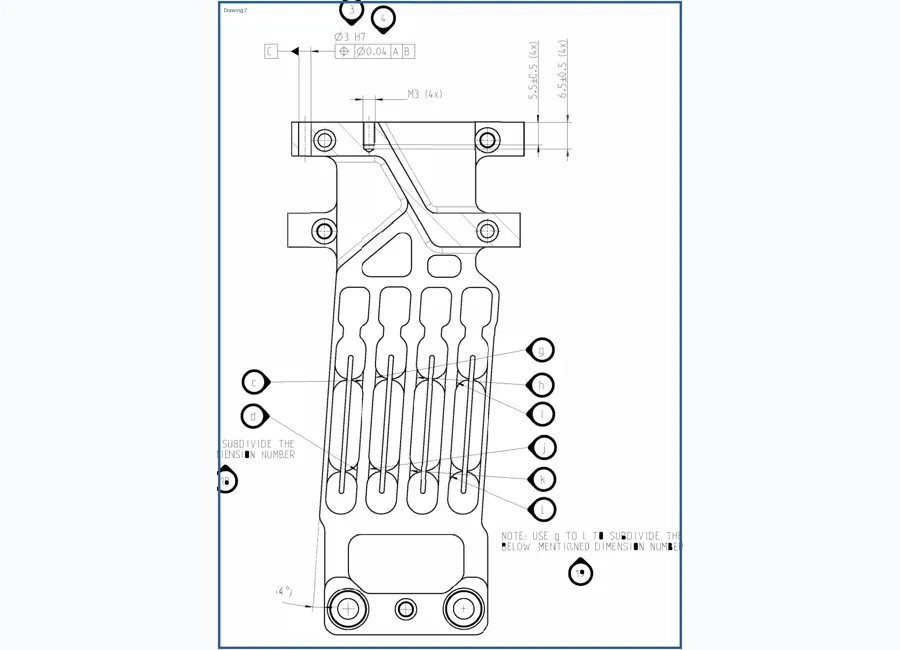
The flange areas were treated as relationship features, not separate faces.
Thin-wall structure and stress control
After roughing, the remaining structure had weak stiffness. Thin-wall aluminum parts can move after material removal because the internal stress balance changes. The part may look acceptable immediately after one operation and then drift before final finishing.
TaiMachining used low-temperature stress relief, uniform roughing allowance, a rest period after roughing, and lower-load finishing passes. The goal was to make movement predictable before the final dimensions were created. Short, rigid cutters were used where possible in narrow areas to reduce vibration.
This is why thin-wall machining should be discussed before toolpath programming, not after inspection fails. The supplier should be able to point to the areas most likely to move and explain how the process reduces that risk.
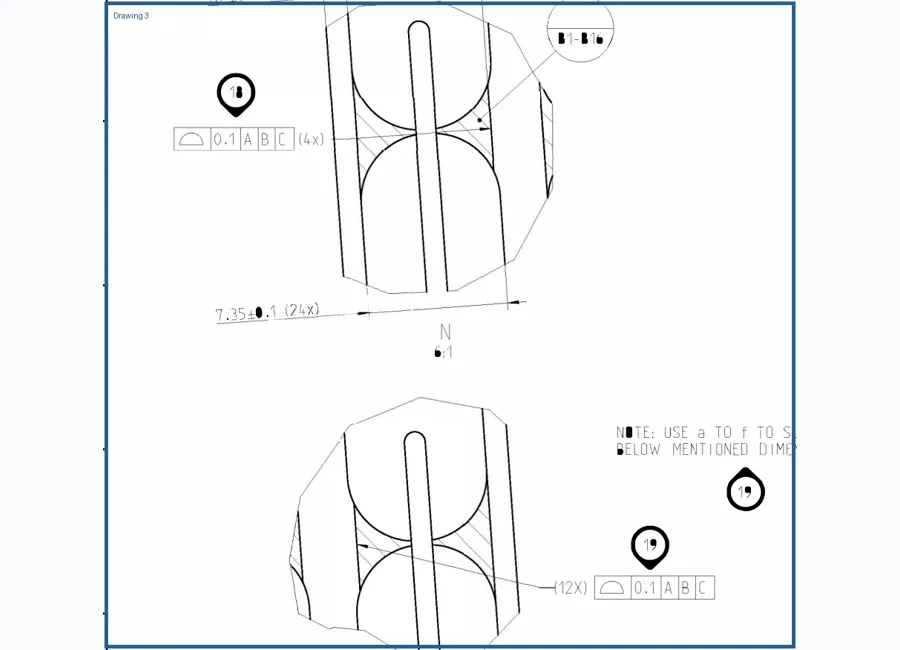
The drawing detail links local thin transitions with the need for stress planning.
Process strategy
The machining strategy combined material preparation and setup control. Low-temperature stress relief helped reduce original plate stress. Roughing left a uniform allowance instead of exposing final thin walls too early. A 24-hour rest after roughing allowed the part to release machining stress before semi-finishing and finishing.
Finishing used high spindle speed, small stepovers, and conservative feed where thin features were most sensitive. Narrow pocket corners were finished with shorter rigid tools where possible. Five-axis machining reduced the need for repeated flipping, which helped protect flange relationships and hole positions.
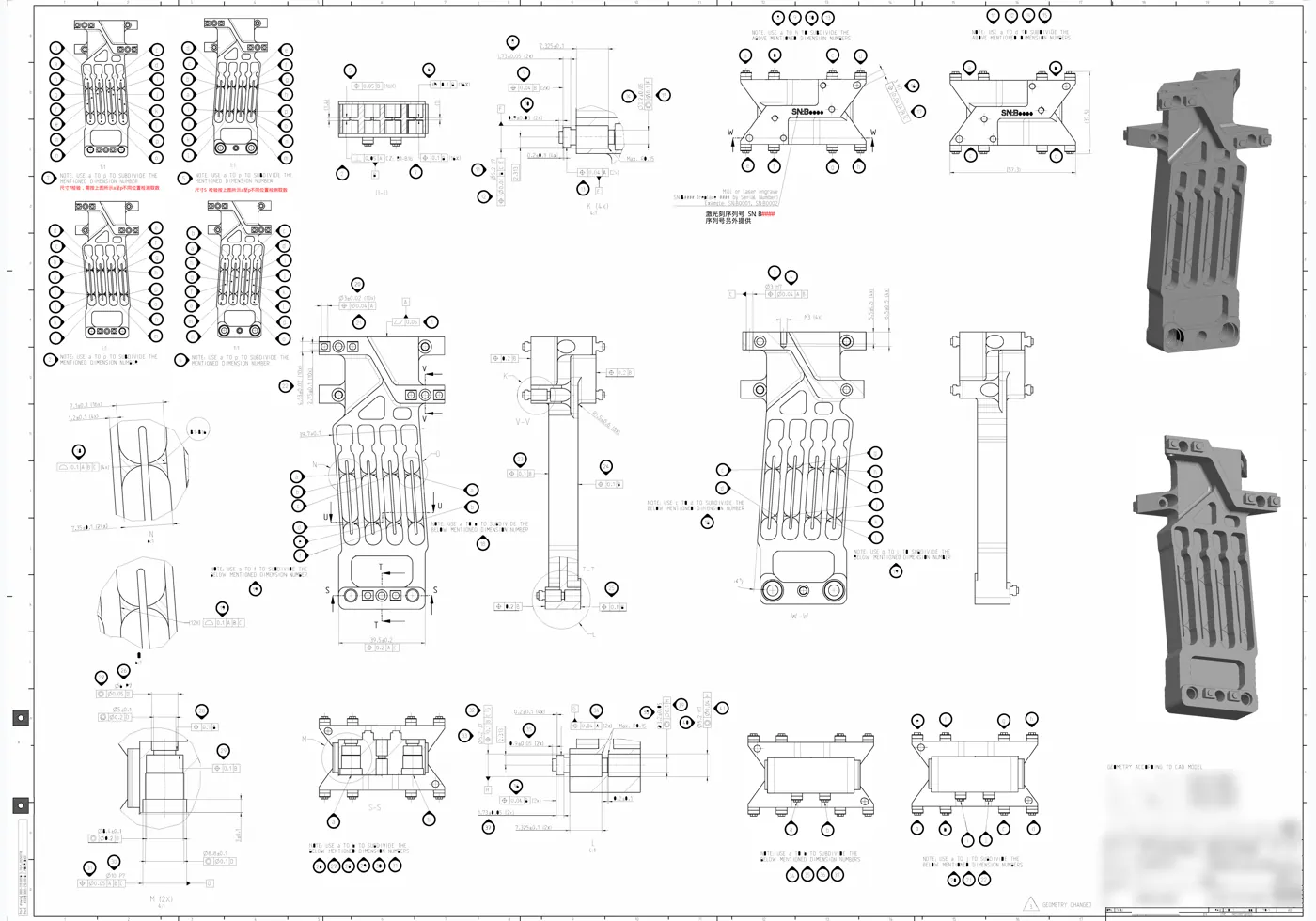
Inspection planning followed the same logic. The focus was not only whether individual dimensions measured correctly, but whether related features stayed aligned across the part. For semiconductor equipment components, that repeatable relationship often matters as much as a single tight dimension.
Buyer takeaways for semiconductor CNC parts
When sending a similar RFQ, include the drawing, 3D CAD file, material grade, finish notes, critical dimensions, and expected quantity. Ask the supplier to identify high-risk features before quoting. For thin-wall aluminum parts, useful answers should mention stress relief, fixture strategy, tool reach, datum control, and inspection sequence.
If a supplier treats a thin ribbed component like a simple aluminum plate, the quote may look attractive but the risk remains. A stronger supplier will discuss where the part may move, how much stock will remain after roughing, when the part will rest, and how the final hole relationships will be checked.
Need semiconductor CNC parts reviewed?
Send drawings, CAD files, quantity, material, finish, and inspection requirements. TaiMachining can review deformation risk and datum strategy before quotation.
Upload drawings for semiconductor CNC review