




 Talk to Our Team
 Start Production







Case Study | Aerospace CNC Machining
CNC Machining a Large Aluminum Aerospace Structural Base
TaiMachining controlled stress movement, datum transfer, and support rigidity when machining a large aluminum aerospace base with broad pockets, tall walls, and distributed hole patterns.
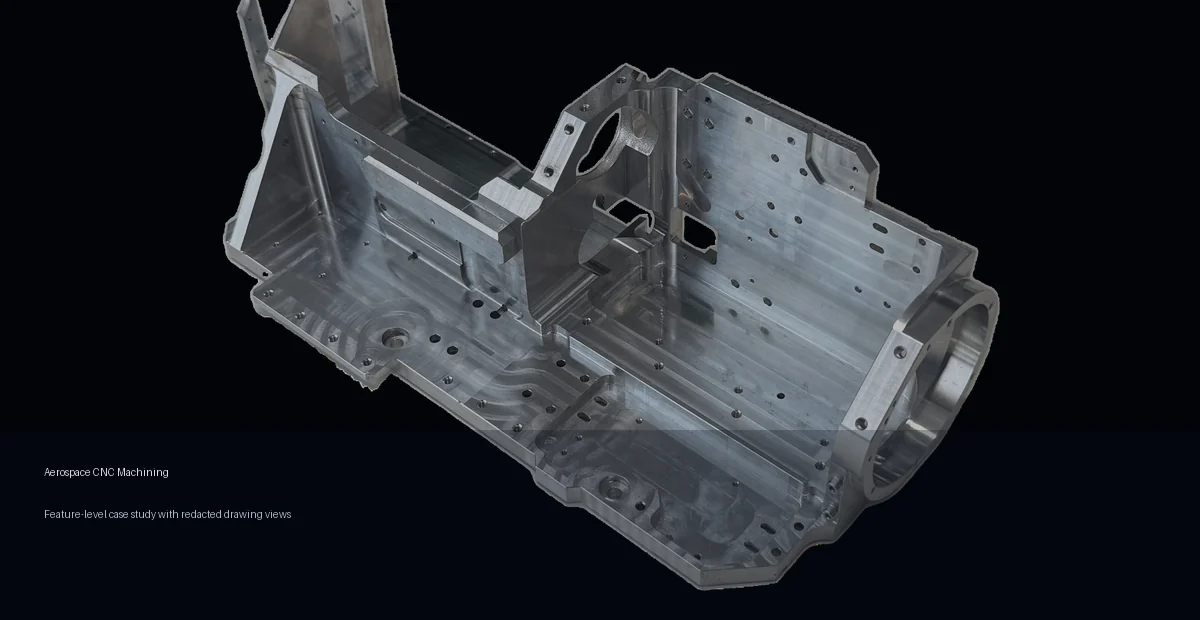
Large aerospace aluminum bases are judged by how stable they remain after rough machining, not only by how accurate the machine is. The drawing may show pockets, walls, ribs, mounting faces, and hole fields as separate details. In production, they behave as one stress-sensitive structure.
This part required staged machining because heavy material removal changes stiffness across the base. Once a large pocket is opened, tall walls and local mounting areas no longer have the same support they had in the raw stock. If final finishing begins too early, the part can continue to relax after the cutter has already created the final surfaces.
TaiMachining reviewed the part as a large structural component rather than a collection of separate features. The process combined stress relief, roughing, rest time, semi-finishing, datum control, support fixturing, and intermediate checks before final finishing.
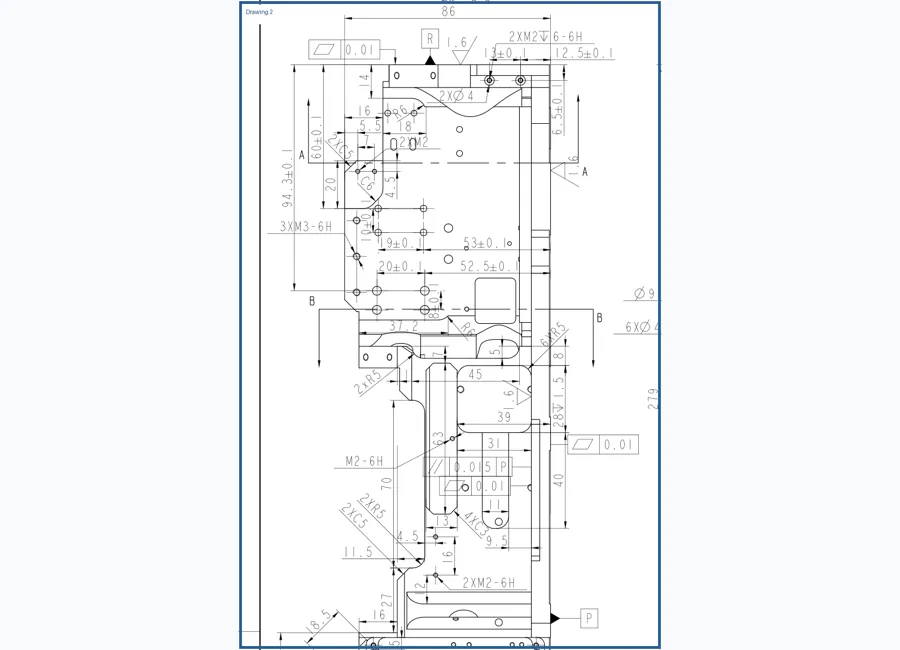
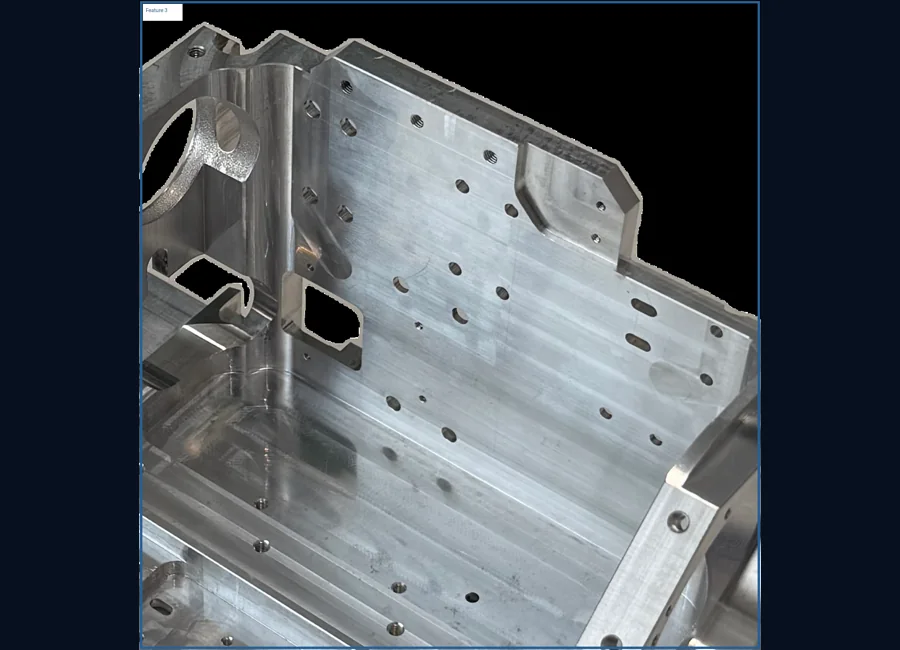
Large pocketed base area
The broad pocketed areas were the main stress-release zones. Removing this much material changes the balance inside the aluminum. The risk is not only that one pocket will be out of tolerance. The larger risk is that the base relaxes and moves the relationship between multiple features.
TaiMachining removed material in stages and avoided using final finishing as a way to correct uncontrolled movement. Roughing created the basic shape while leaving room for the part to settle. Semi-finishing and finishing were sequenced after the part had time to release stress.
The product close-up shows the scale of material removal, while the drawing crop shows why the pocket geometry and distributed hole pattern had to be reviewed together.
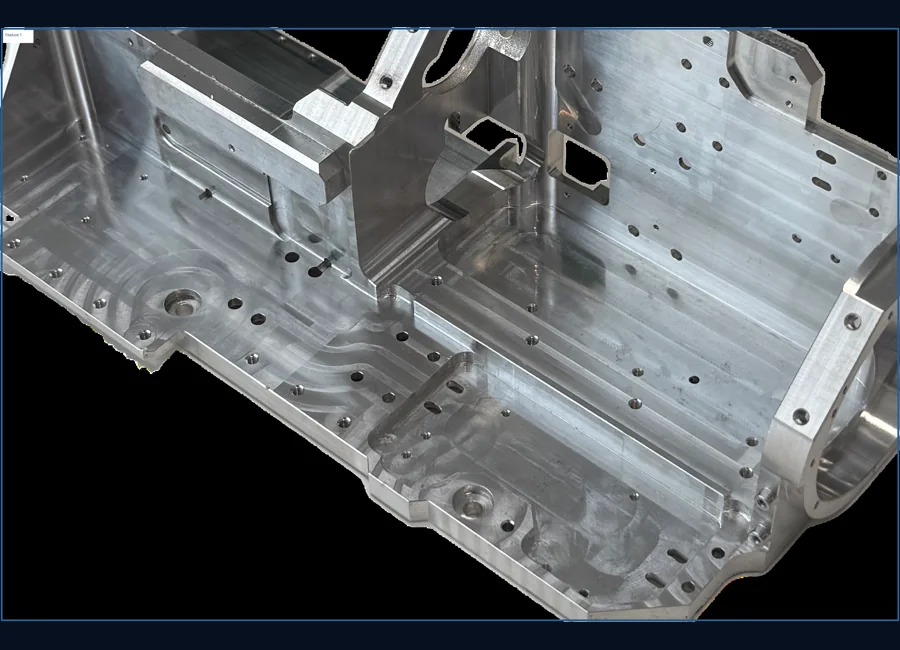
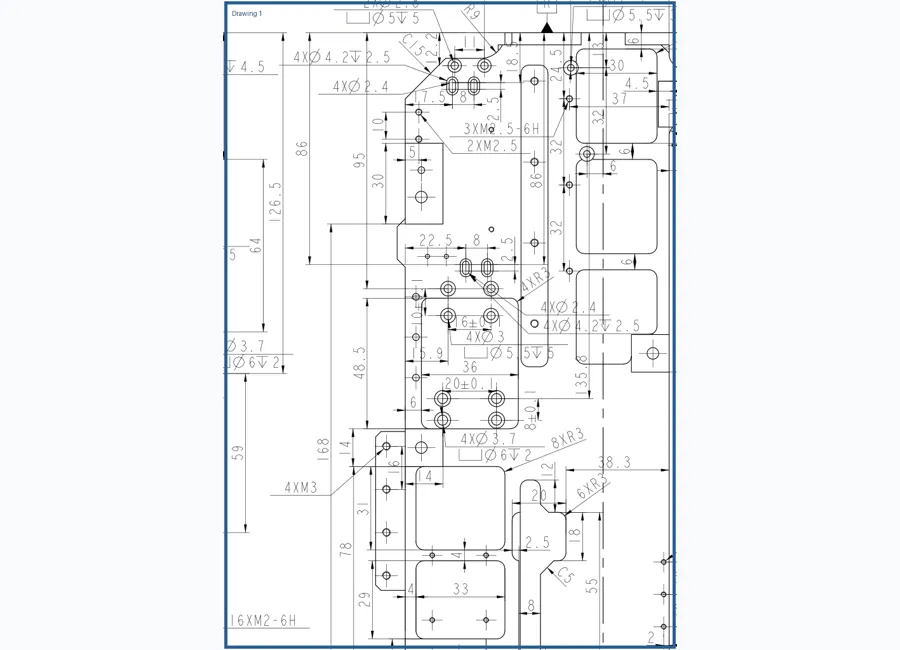
The part photo and drawing crop show how much material removal had to be managed through staged machining.
Tall wall and auxiliary support risk
Tall walls and open side features are vulnerable to vibration because they behave like flexible structures during cutting. A wall may look strong in the finished part, but while the cutter is engaged, local stiffness depends heavily on how the part is supported.
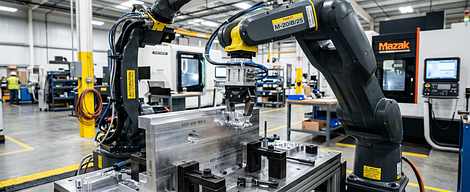
TaiMachining used a dedicated support fixture to give the tall wall a stable backing. This reduced the chance of chatter marks and local dimensional drift. The goal was not simply to clamp the part harder. Over-clamping can introduce distortion. The fixture had to support the part without forcing it out of shape.
This is a common issue in large aerospace aluminum machining. Support should be planned around the weak geometry, especially where walls are high, open, or far from the main clamping area.
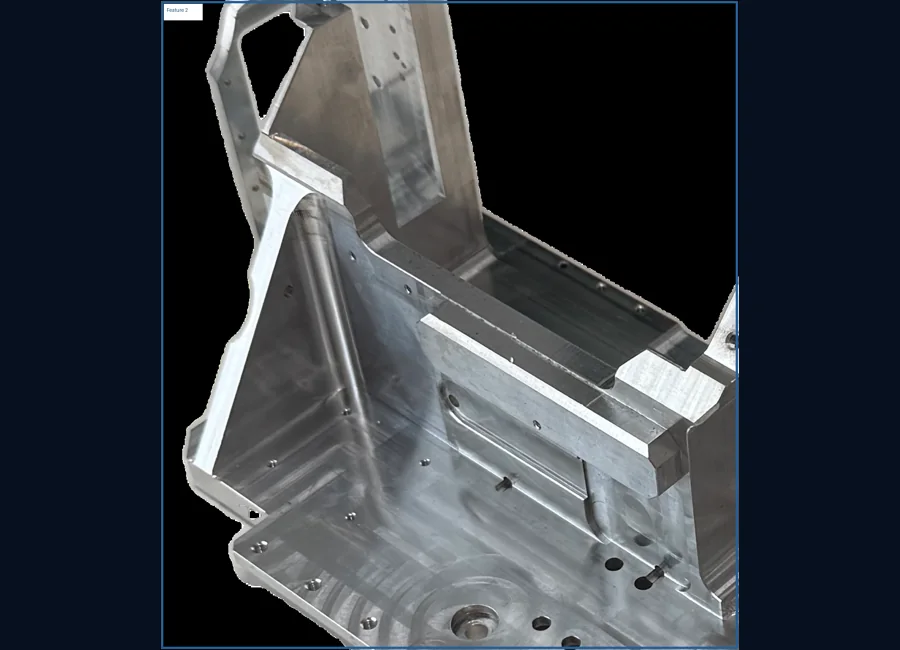
The support strategy mattered most where the structure became tall and open.
Datum surfaces and hole patterns
The base contains many holes across several mounting areas. On a large structural part, a local hole can measure correctly while the overall relationship is wrong. That is why datum planning is a manufacturing decision, not just an inspection note.
TaiMachining kept a consistent datum strategy through later operations. Reducing unnecessary datum changes helped protect the relationship between hole groups, machined faces, and mounting areas. This also made final inspection more meaningful because the checks reflected how the part would be assembled.
For buyers, this is one of the most important questions to ask before ordering large aluminum parts: which features define the datums, and which hole groups will be checked against them?
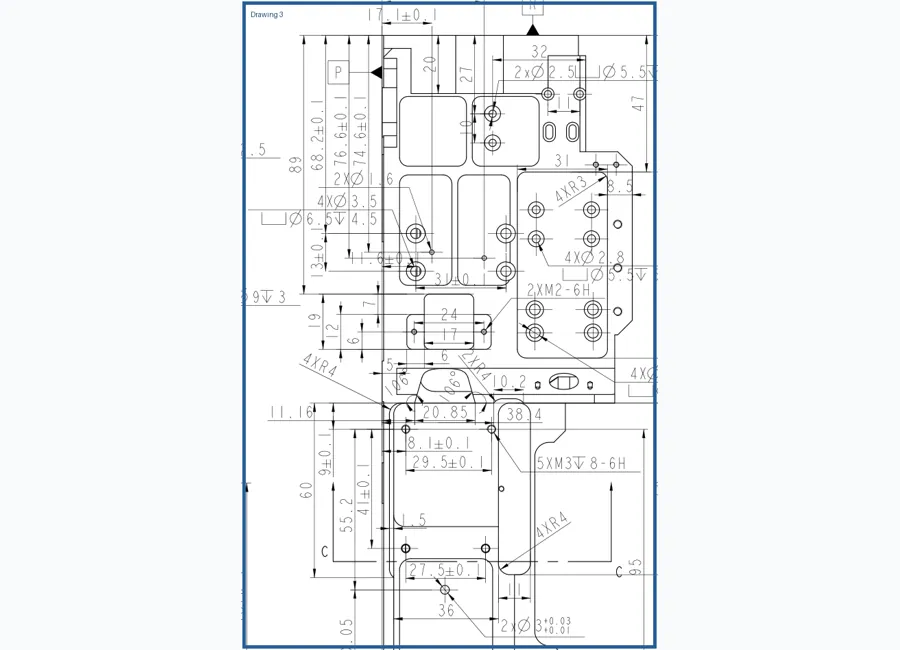
The hole groups were reviewed as assembly relationships, not only as individual drilled features.
Process strategy
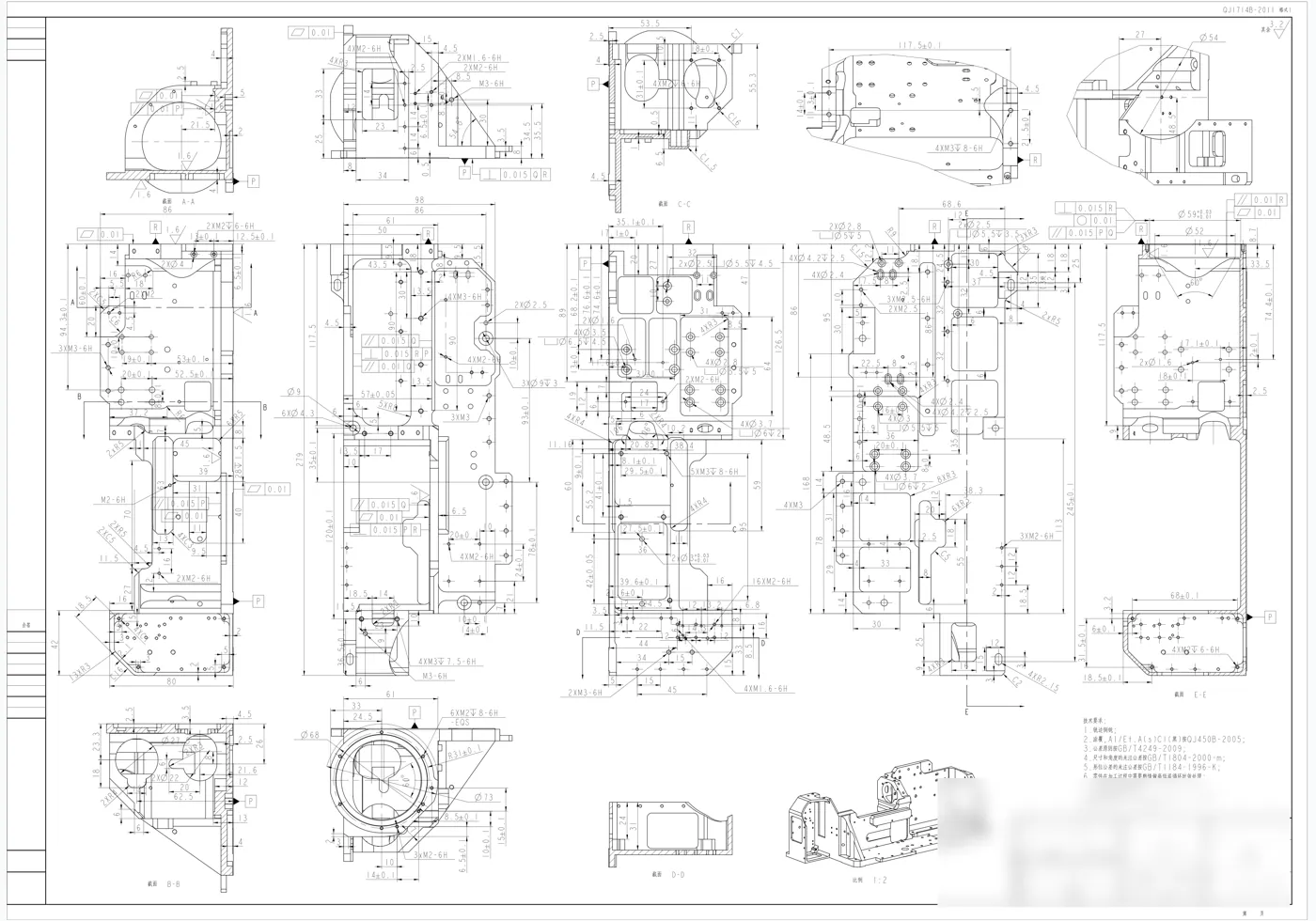
The process started with pre-machining stress relief. Heavy roughing removed major stock, followed by semi-finishing and a secondary stress-relief interval of about 24 hours. Final machining was performed only after the part had stabilized enough for controlled finishing.
Unified datum surfaces were used through later operations to reduce conversion error. Auxiliary support improved rigidity where the part would otherwise behave like a cantilever. Intermediate inspection helped confirm whether the part was moving before final features were finished.
This combination is what makes the case useful for aerospace buyers. It shows how TaiMachining thinks about large-part behavior over time, not only how the part looks after machining.
Buyer takeaways for aerospace aluminum structures
When sending a similar RFQ, ask for the roughing, resting, semi-finishing, and finishing sequence. Ask where the supplier expects movement after roughing. Ask how tall or open walls will be supported, and how datum surfaces will be maintained across multiple setups.
A useful aerospace machining quote should discuss process risk, not only price and lead time. Large aluminum parts need a plan for stress, support, datum control, and inspection before the first toolpath is finalized.
Need aerospace aluminum structures reviewed?
Send drawings, CAD files, material notes, quantity, finish requirements, and inspection expectations. TaiMachining can review stress relief and large-part inspection strategy before quotation.
Upload drawings for aerospace CNC review