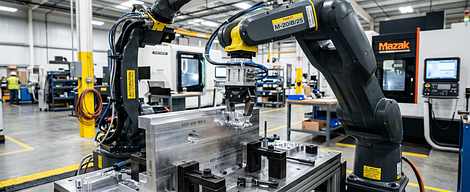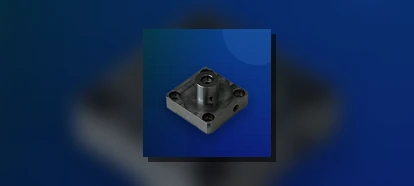
Semiconductor equipment often uses machined parts in motion systems, inspection equipment, vacuum related assemblies, fixtures, brackets, housings, and automation modules. Many of these components are not difficult because of their size. They are difficult because small errors can affect alignment, assembly, sealing, or repeatability.
For this kind of work, machining quality control starts before chips are cut. The drawing, material, tolerances, surface requirements, and inspection expectations need to be reviewed together so the production route is clear.
Why quality control matters for semiconductor parts
Semiconductor components often sit inside larger equipment systems. A hole position that is slightly off, a surface that is not flat enough, or a burr near an assembly edge can create problems later during installation or testing.
Common quality concerns include tight dimensional tolerances, flatness, parallelism, hole position, thread quality, surface finish, burr control, material verification, and clean packing. Some projects also need inspection reports or material certificates before parts are approved for use.
Drawing review comes first
A reliable review starts with the 2D drawing. The supplier should check critical dimensions, datum references, geometric tolerances, thread notes, surface finish callouts, material grade, revision level, and documentation requirements.
This review helps catch questions early. If a tolerance is difficult to hold, if a feature may need grinding or EDM, or if a finish requirement may change a final dimension, those details should be discussed before quotation.
Process planning affects consistency
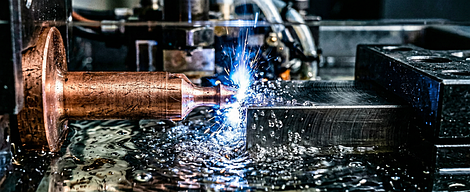
Different semiconductor parts may need different routes. CNC milling is common for plates, housings, brackets, pockets, and multi-face features. CNC turning is common for spacers, sleeves, shafts, and round components. Grinding may support flatness or close tolerance surfaces. EDM may help with narrow slots, sharp internal corners, or difficult precision features.
The process plan should connect the drawing requirements with the equipment and inspection method. Thin walls, deep pockets, tight hole positions, and multiple critical surfaces usually need closer review before production.
Inspection should focus on functional features
Not every dimension has the same importance. Inspection planning should identify the features that control fit, alignment, sealing, motion, or assembly with other parts.
Typical inspection points include overall dimensions, hole diameter and position, thread accuracy, flatness, parallelism, perpendicularity, concentricity, surface roughness, and critical assembly interfaces. Depending on the drawing, inspection may use calipers, micrometers, pin gauges, thread gauges, height gauges, CMM inspection, or roughness testing.
Materials and surface requirements need clear notes
Material selection can affect machining stability, weight, corrosion resistance, thermal behavior, and surface treatment compatibility. Aluminum, stainless steel, engineering plastics, and copper alloys are all possible choices depending on the application.
Surface finishing should be reviewed together with the drawing. Anodizing, passivation, plating, black oxide, bead blasting, polishing, and deburring can all affect the final part in different ways. Functional surfaces and cosmetic surfaces should be marked clearly so the supplier knows where extra care is needed.
What to include in the RFQ
A complete RFQ package helps the first technical review move faster. Include the 2D drawing, 3D CAD file if available, material grade, quantity, production stage, finish requirements, critical dimensions, inspection report requirements, packing notes, target lead time, and any mating part information.
Clear RFQ information reduces back and forth communication. It also helps the machining supplier review cost, lead time, risk, and inspection requirements more accurately.
Need semiconductor CNC parts reviewed?
Send drawings, CAD files, material notes, quantity, finish requirements, and inspection expectations. TaiMachining can review the practical machining route before quotation.
Send drawings for CNC quality review


Talk to Our Team
Start Production